Starry sky over Vernadsky station: Ukrainian polar explorers show unique footage of the Milky Way
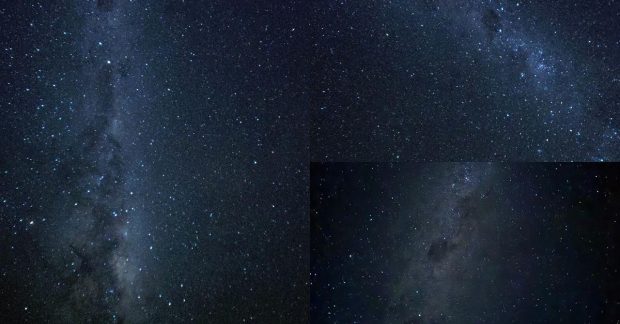
Ukrainian polar explorers from Galindez Island shared incredible photos of the Antarctic night sky, where the Milky Way looks completely different due to its location in the Southern Hemisphere.
 ⚽Sport
Photo: UNIAN
Key points
- Polar explorers showed new photos of the Antarctic starry sky
- In the Southern Hemisphere, the Milky Way looks inverted
- Canopus and the Magellanic Clouds cannot be seen from Ukraine
Researchers from the National Antarctic Scientific Center have published photographs of the night sky over the Akademik Vernadsky station, located on Galindez Island. Due to the specifics of its location in the Southern Hemisphere, familiar constellations and the galactic band itself appear to observers from a completely different angle, visually looking inverted compared to northern latitudes.
Mysteries of cosmic dust and the galactic center
The published frames clearly show not only bright stars, but also characteristic dark bands crossing the entire structure of the Milky Way. Scientists explain that these are huge clouds of interstellar dust that absorb the light of stars lying behind them. Among such formations, experts highlight the Great Rift, as well as the famous dark nebula Coalsack near the constellation of the Southern Cross.
In the direction of the constellation Sagittarius lies the center of our Galaxy, where a dense cluster of stars, the bulge, is concentrated. However, due to a thick layer of dust, it is impossible to see this center in visible light, which is why astronomers resort to using infrared and X-ray telescopes.
Unique objects of the Southern sky
Antarctic expeditions have a unique opportunity to observe celestial bodies that are fundamentally impossible to see from the territory of Ukraine. In particular, we are talking about Canopus, the second brightest star in the night sky, as well as two dwarf satellite galaxies of the Milky Way — the Large and Small Magellanic Clouds.
Recall that earlier, participants of the Ukrainian Antarctic mission recorded another fascinating natural phenomenon in the region — the iridescence of cirrus clouds, when sunlight, due to diffraction and interference, forms rainbow overflows resembling a giant soap bubble.
Source UNIAN — unian.ua/science/polyarniki-pokazali-chumackiy-shlyah-z-pivdennoji-… ↗
Read next
 🧠AI Analysis
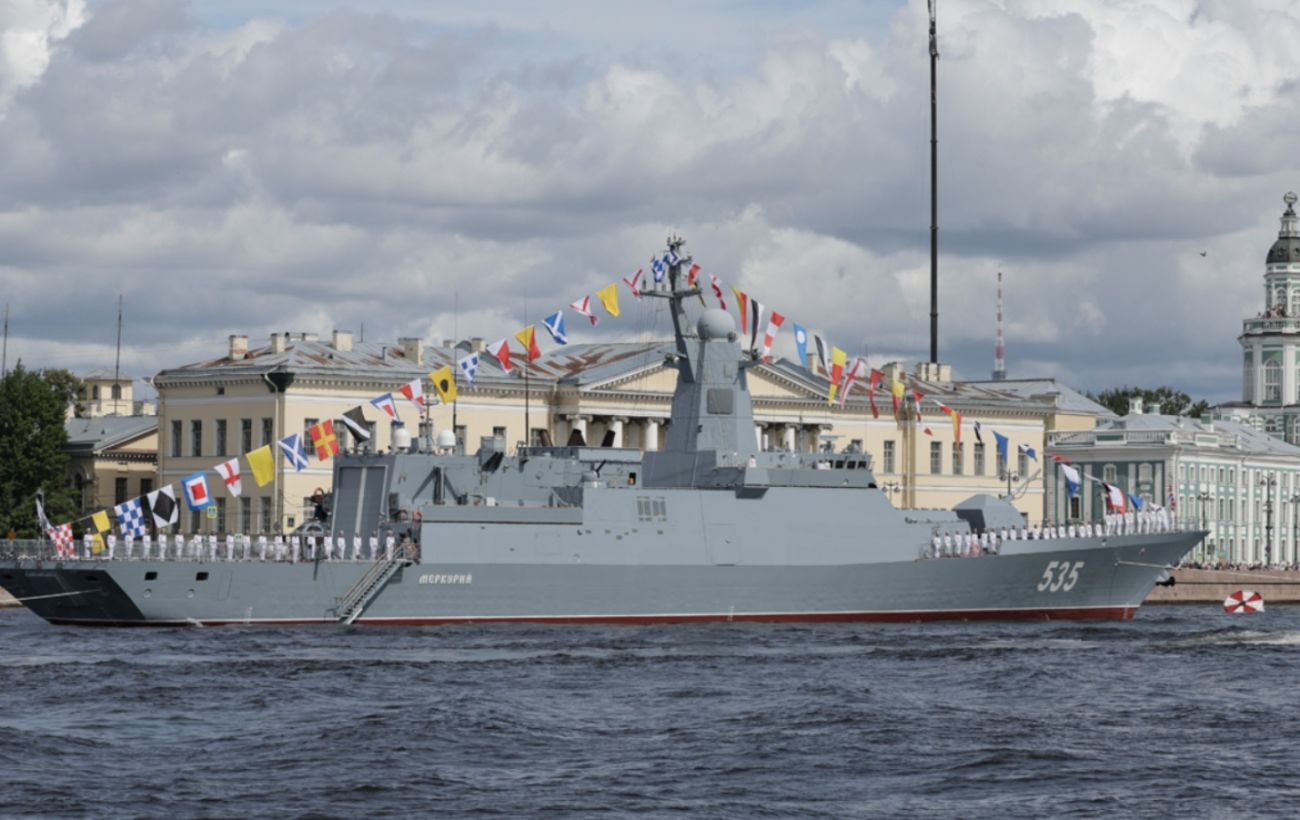
Russian Corvette Mercury Destroyed in Mediterranean: Details of Ukrainian Operation Near Libya
Ukrainian Defense Forces, in cooperation with the SBU, struck and sank the Russian Project 20380 corvette Mercury near the Libyan port of Benghazi.
 🛡️Security
Reasons behind delays in Kyiv region energy protection construction revealed
The construction of protective structures for energy facilities in the Kyiv region faced severe obstacles, including underfunding, late site transfers, worker mobilizatio…
 🧠AI Analysis
Volodymyr Zelenskyy Declares Ukraine's Readiness for Four-Party Talks to End the War
The Ukrainian President stated that the country is ready for peace talks involving Ukraine, Europe, America, and Russia as early as possible, emphasizing the need for a u…
 🧠AI Analysis
US Congress Shift: What American Elections Mean for Ukraine and Communities
The Democratic majority in both houses of the US Congress creates new opportunities for oversight and support, while requiring continued bipartisan cooperation.
 🇺🇦Ukraine
Tragedy in Dymer: Death Toll Rises to 11 Following Russian Strike on Residential Building
Rescue operations continue in Dymer, Kyiv region, after a Russian drone strike killed 11 people and left two others missing under the rubble.
 🛡️Security
Blow to Kremlin's Ambitions in Africa: Details of Corvette 'Mercury' Destruction
Ukrainian Defense Forces conducted a unique operation off the coast of Libya, sinking the Russian corvette 'Mercury,' one of Russia's newest naval assets.