Neptune Missile Strike Damages Railway Track on Kerch Bridge
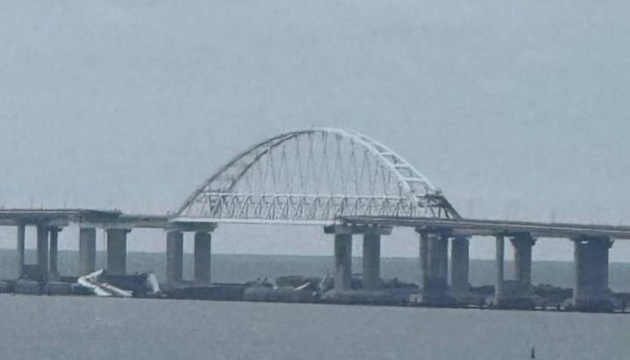
Overnight on November 19, Ukrainian Navy missile forces struck the Crimean Bridge using Neptune missiles, halting railway traffic.
 🚌Transport
Photo: Ukrinform
Key points
- Ukrainian Navy missile units hit the Kerch Bridge with Neptune missiles overnight on November 19.
- The strike damaged the railway track, halting train traffic across the Kerch Strait.
- The attack follows confirmed damage to three logistical bridges in Luhansk and Rostov regions on November 14–15.
Overnight on November 19, explosions were reported near the Kerch Strait as Ukrainian forces launched a missile strike against the illegally constructed bridge connecting Russia with occupied Crimea. According to the General Staff of the Armed Forces of Ukraine, the operation was conducted by missile units of the Ukrainian Navy utilizing domestic Neptune coastal defense missile systems. The target was successfully hit, damaging the railway track and halting traffic across the span.
The Crimean Bridge serves as the primary logistical artery relied upon by Russian forces to transport fuel, ammunition, and military hardware to occupation troops in southern Ukraine. Ukrainian military officials noted that Neptune missiles previously demonstrated their effectiveness in April 2022 when striking the Russian Black Sea Fleet flagship Moskva.
Systematic Disruption of Military Supply Routes
The strike on the Kerch crossing is part of a broader tactical effort to dismantle enemy transport networks. Military leadership confirmed that road surfaces on three other strategic bridges were damaged in recent days during preceding strikes.
- November 14: A strike damaged a bridge over the Mius Estuary near Lakedomonovka in Russia's Rostov region;
- November 15: Damage was confirmed on a bridge crossing the Siverskyi Donets River near Pryshyb in the Luhansk region;
- November 15: An attack targeted a bridge over the Mius River near Taganrog in the Rostov region.
Military analysts highlight that disabling key bridge crossings forces military convoys onto extended detour routes, leading to traffic congestion and severe supply chain delays for frontline units waiting for fuel and munitions.
"Every bridge put out of action means longer detours, congestion at crossings and delayed convoys carrying ammunition and fuel," the General Staff stated.
Ukrainian Defense Forces continue exercising their right to self-defense under Article 51 of the UN Charter, systematically acting to erode the enemy's logistical capacity.
Source Ukrinform — ukrinform.net/rubric-ato/4186350-neptune-missile-strike-damages-rai… ↗
Read next
 ⚽Sport
Artem Dovbyk may change clubs: striker considers move to Spain's Valencia
Ukrainian forward Artem Dovbyk has expressed readiness to move to Valencia due to a lack of playing time in Italy.
 💡Tech
Geographical discovery: Everest loses its status as the planet's highest mountain
Scientists have revised data on Earth's highest points, recognizing the Hawaiian volcano Mauna Kea as the leader in absolute height from base to peak.
 🏙️City
Energy security of the region: Zelensky on the consequences of attacks on power grids
President Volodymyr Zelensky reported on the enemy's deliberate attempts to cut off the Odesa and Dnipropetrovsk regions from power sources by damaging energy infrastruct…
 🏛️Politics
Jared Kushner outlines Trump's conditions for security guarantees for Ukraine
Jared Kushner, special envoy for Donald Trump, stated that the US might consider security guarantees for Ukraine similar to NATO's Article 5, provided they are part of a …
 🎭Culture & Sport
National Guard soldier becomes a contestant on 'The Voice of Ukraine-14'
National Guard member Taras Redziy successfully passed the blind auditions of the popular vocal show, joining Natalia Mogilevskaya's team.
 🩺Health
The Secret to Canned Sardine Nutrition: Why You Shouldn't Discard the Bones
Nutritionists explain that removing soft bones from canned sardines deprives the body of a significant portion of calcium.